Water, chlorine and steam are three different loads
A pool means constant contact with water and chemistry. A Turkish bath means steam at body temperature condensing on every surface, and a heating cycle several times a day. A shower zone means flooding and rapid drying in turn. In each case a material that absorbs even a little water will eventually part from its substrate. Glass and ceramic absorb none at all – which is why they have been the standard for pools worldwide for decades.
Pool: shell, waterline, floor
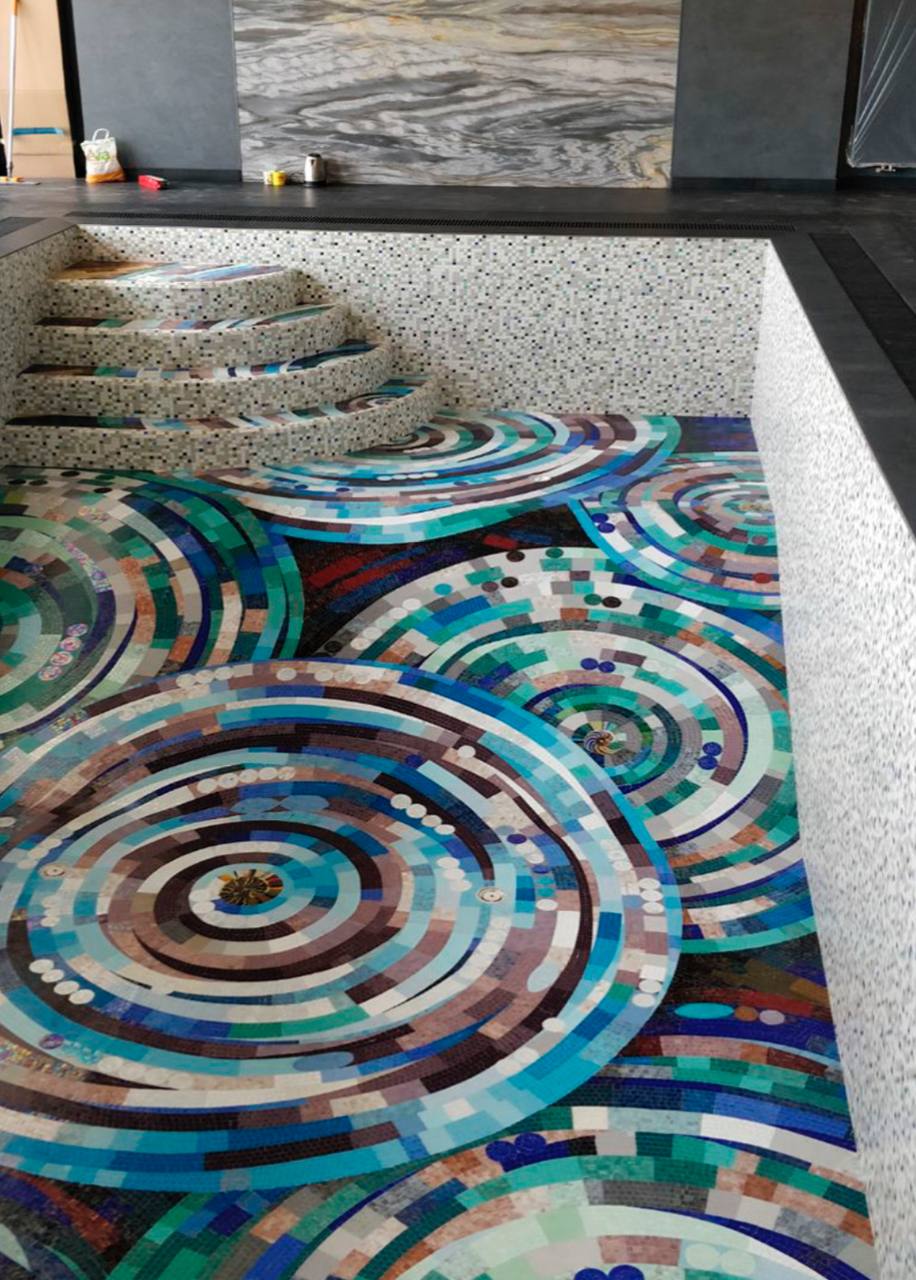
In the shell we can do the whole finish or just an accent: a band at the waterline, a floor with ornament or a composition, walls in a gradient running from light at the bottom to dark at the top. Mosaic allows what large format cannot: carrying a pattern over the curve of the floor, around the steps and round the radius of a corner, without cutting it into pieces.
Turkish bath and hammam
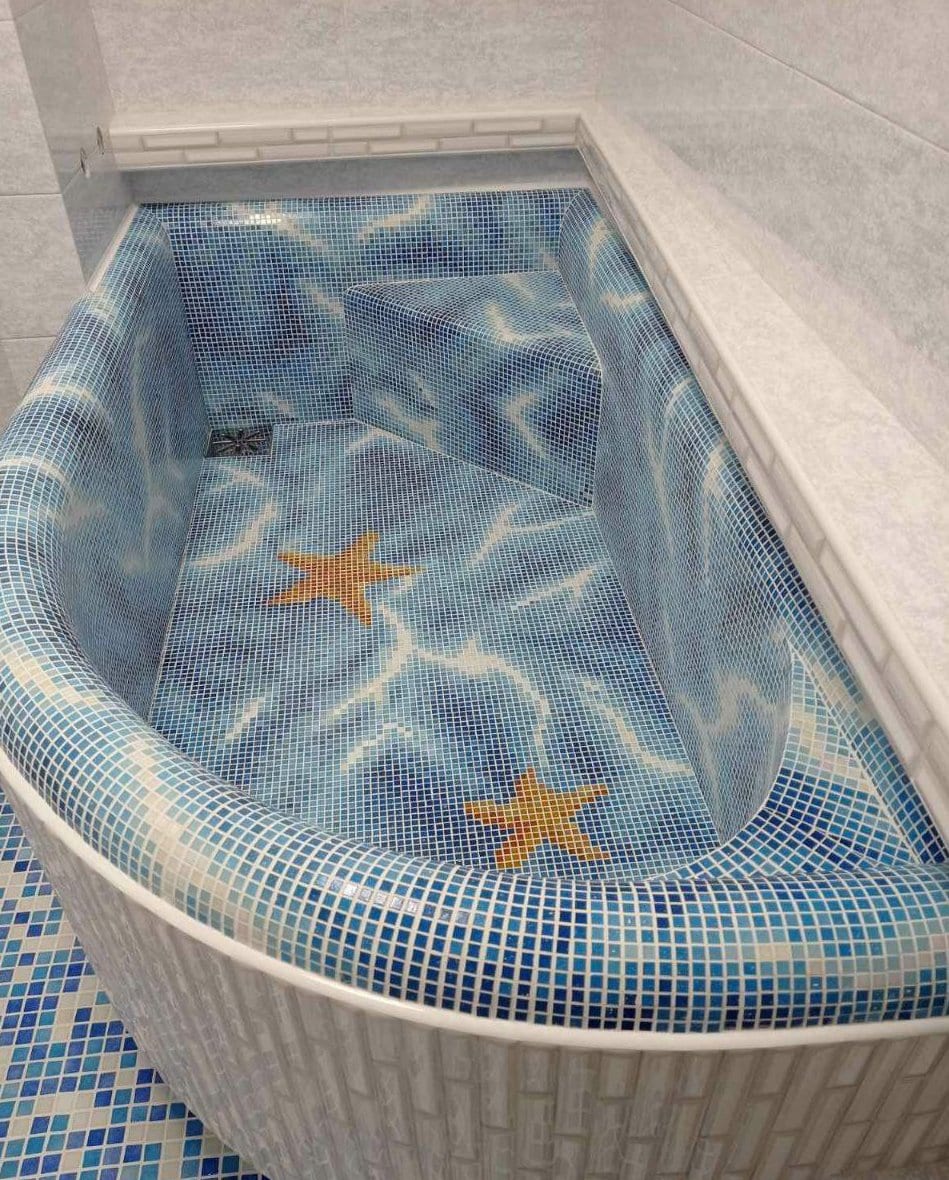
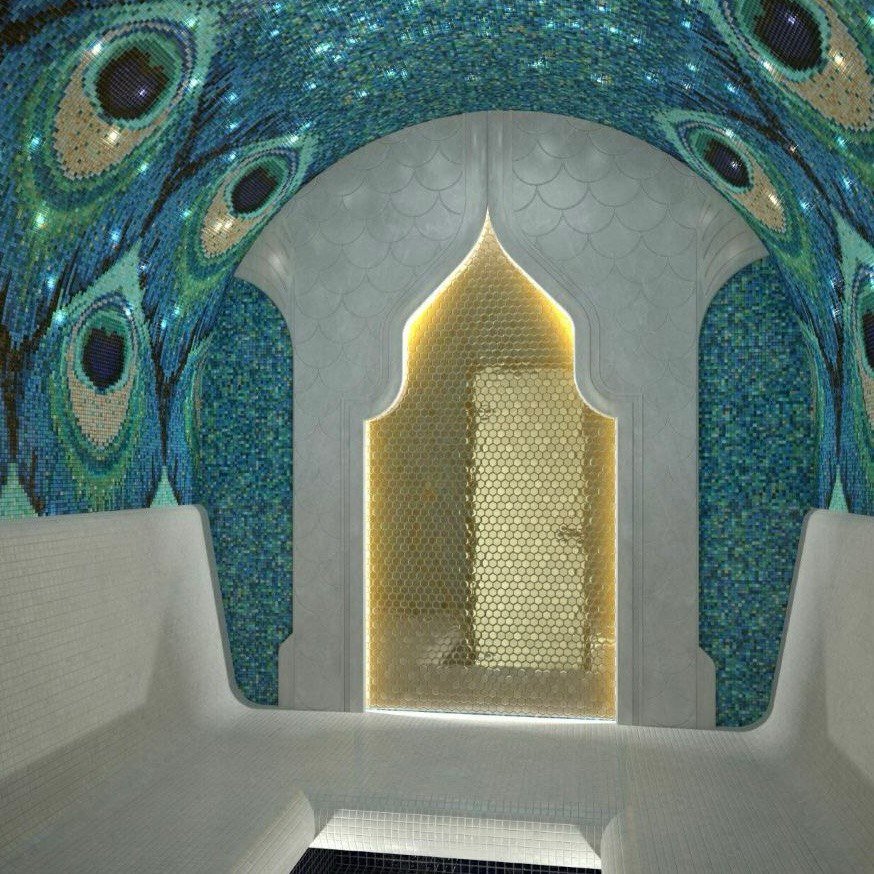
Vaults, domes, benches, backrests and niches. These are surfaces curved in two directions at once, on which a large tile simply cannot sit – the small module of mosaic follows them without stress and without a grid of cuts. Mosaic also takes the cyclical heating and cooling that a steam room goes through every day, all year.
Adhesives, grouts and substrate
In permanently wet zones we use adhesives and grouts intended for pools – most often epoxy, resistant to pool chemistry and non-absorbent. The substrate matters just as much: the shell must be built and waterproofed properly before any mosaic goes on. When costing, we ask about the state of the shell and the type of waterproofing, so it does not come to light on site.
Price and how it runs
A mosaic costs from 4,000 to 15,000 PLN per m². The price depends on the complexity of the composition, the number of details and the materials – a plain shell finish and a figurative panneau are two different bands. The stages: dimensions and a plan, design, making in the workshop, delivery in sections, installation by us or by your own contractor to the diagram. The estimate is free.
Adhesives, grouts and substrate
In permanently wet zones we use adhesives and grouts intended for pools – most often epoxy, resistant to pool chemistry and non-absorbent. The substrate matters just as much: the shell must be built and waterproofed properly before any mosaic goes on. When costing, we ask about the state of the shell and the type of waterproofing, so it does not come to light on site.
Price and how it runs
A mosaic costs from 4,000 to 15,000 PLN per m². The price depends on the complexity of the composition, the number of details and the materials – a plain shell finish and a figurative panneau are two different bands. The stages: dimensions and a plan, design, making in the workshop, delivery in sections, installation by us or by your own contractor to the diagram. The estimate is free.
Frequently asked questions
How much does a pool mosaic cost?
From 4,000 to 15,000 PLN per m², depending on the complexity of the design, the number of details and the materials. The estimate is free once we have the shell dimensions and a plan.
Will mosaic survive chlorinated water?
Yes. Glass and ceramic absorb no water and do not react with pool chemistry – the colour does not fade and the material does not delaminate. The adhesives and grouts intended for pools are decisive here.
Is mosaic suitable for a Turkish bath?
Yes, it is one of its natural uses. It takes steam, condensation and daily heating cycles, and the small module allows vaults and benches to be covered without cutting.
What grouts and adhesives do you use?
In permanently wet zones, usually epoxy – non-absorbent and resistant to pool chemistry. We state the choice in the estimate, together with the requirements for the substrate.
Can mosaic be laid on curves?
Yes, and that is its main advantage over large format. We match the module to the radius: the tighter the curve, the smaller the tessera.
Who carries out the installation?
We can install it ourselves, or deliver the work on numbered sections with a setting diagram for your own pool contractor to follow.